
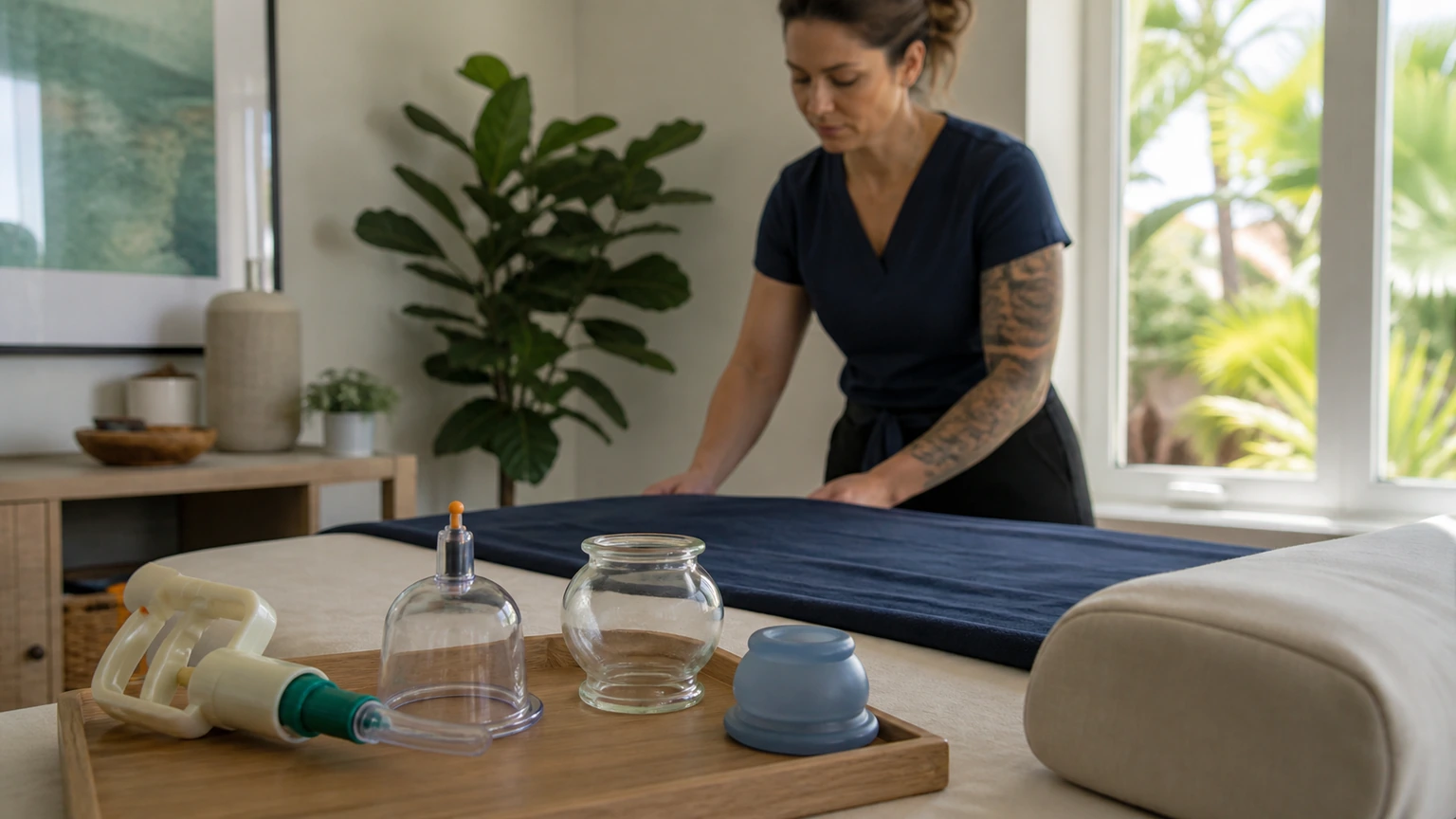
Cupping therapy is the placement of special cups on the skin to create suction that gently lifts the skin and underlying muscle. It began in ancient Chinese and Middle Eastern medicine. Unlike massage, which pushes down into tissue, cupping pulls it upward, which reaches deep muscle layers a standard massage leaves untouched.
How does cupping therapy work?
Cupping works because the suction inside the cup pulls blood and fluid toward the surface of the skin, so the treated area receives more oxygen and nutrients almost immediately. That vacuum effect improves blood circulation, releases tight muscles and fascia, reduces inflammation, moves lymphatic fluid and promotes relaxation. The round marks that appear afterward are not bruises: they show increased blood flow to the area, and they fade within a few days.
What are the four types of cupping?
The four types are dry cupping, moving or gliding cupping, wet cupping and flash cupping. The technique is adjusted to the area being treated and to how sensitive the patient is, so no two sessions look the same.
- Dry cupping. The most common type - cups are placed on the skin and suction is created with a pump or heat, then left in place for five to fifteen minutes. Suits muscle tension, pain and poor circulation.
- Moving (gliding) cupping. Oil is applied to the skin first, then the cups are glided across the area. This works on larger muscle groups like the back and legs, and feels like a deep-tissue massage.
- Wet cupping. Involves light surface cuts before suction is applied. It is used only when specifically indicated, performed by trained professionals, and is not required for most conditions.
- Flash cupping. Uses quick suction and release rather than sustained pressure, and is chosen for more sensitive patients.
What are the benefits of cupping therapy?
The benefits cluster into six areas: pain relief, muscle recovery, reduced inflammation, stress reduction, better circulation and immune support. Because cupping targets blood flow and muscle tension directly, the effects stay consistent across patients.
- Pain relief - used for back, neck and shoulder pain, arthritis and sciatica
- Muscle recovery - athletes use cupping to recover faster after training and reduce soreness
- Reduced inflammation - moves fluid and relieves pressure in areas affected by poor circulation
- Stress reduction - calms the nervous system, so patients leave a session noticeably more relaxed
- Better circulation - more oxygen and nutrients reaching muscles and tissue supports faster healing
- Immune support - assisting lymphatic drainage supports overall detox and immune function
Which conditions does cupping therapy help?
Cupping helps back and neck pain, shoulder tightness, headaches and migraines, sciatica, fibromyalgia, sports injuries, arthritis and joint pain, stress and anxiety, fatigue, and post-surgical stiffness. Results improve when cupping is combined with Acupuncture, because the two techniques reach circulation and nervous-system regulation from different angles.
What happens during a cupping session?
A session starts with a short health assessment, then cups placed for five to fifteen minutes. Your practitioner asks about your pain, lifestyle and goals before deciding where and how to place the cups. You feel a pulling or stretching sensation rather than pain. Afterward most people feel relaxed, occasionally slightly sore, and any circular marks fade within a few days.
Is cupping therapy safe?
Cupping is safe, non-invasive and medication-free when a trained professional performs it. At Advanced Acupuncture, every Cupping Therapy session uses clean, medical-grade equipment and is customized to each patient's comfort and health needs.
Is cupping worth trying?
Cupping is worth trying if pain, tightness or poor circulation have been slowing you down. It is a simple, low-risk treatment used for centuries to support circulation and ease muscle tension. Start with a conversation about whether it fits your treatment plan - see Cupping Therapy or Book an Appointment.