1
Consultation
We review your pain pattern, tension areas and health goals.

Cupping Therapy
Cupping uses gentle suction to lift tissue, boost circulation and release tension held deep in the muscles. Dr. Tsai offers three methods - dry, wet and fire cupping - at Advanced Acupuncture on Johnson Street, where he has practised for 25 years. Sessions run 20 to 30 minutes and use no needles.
What it is
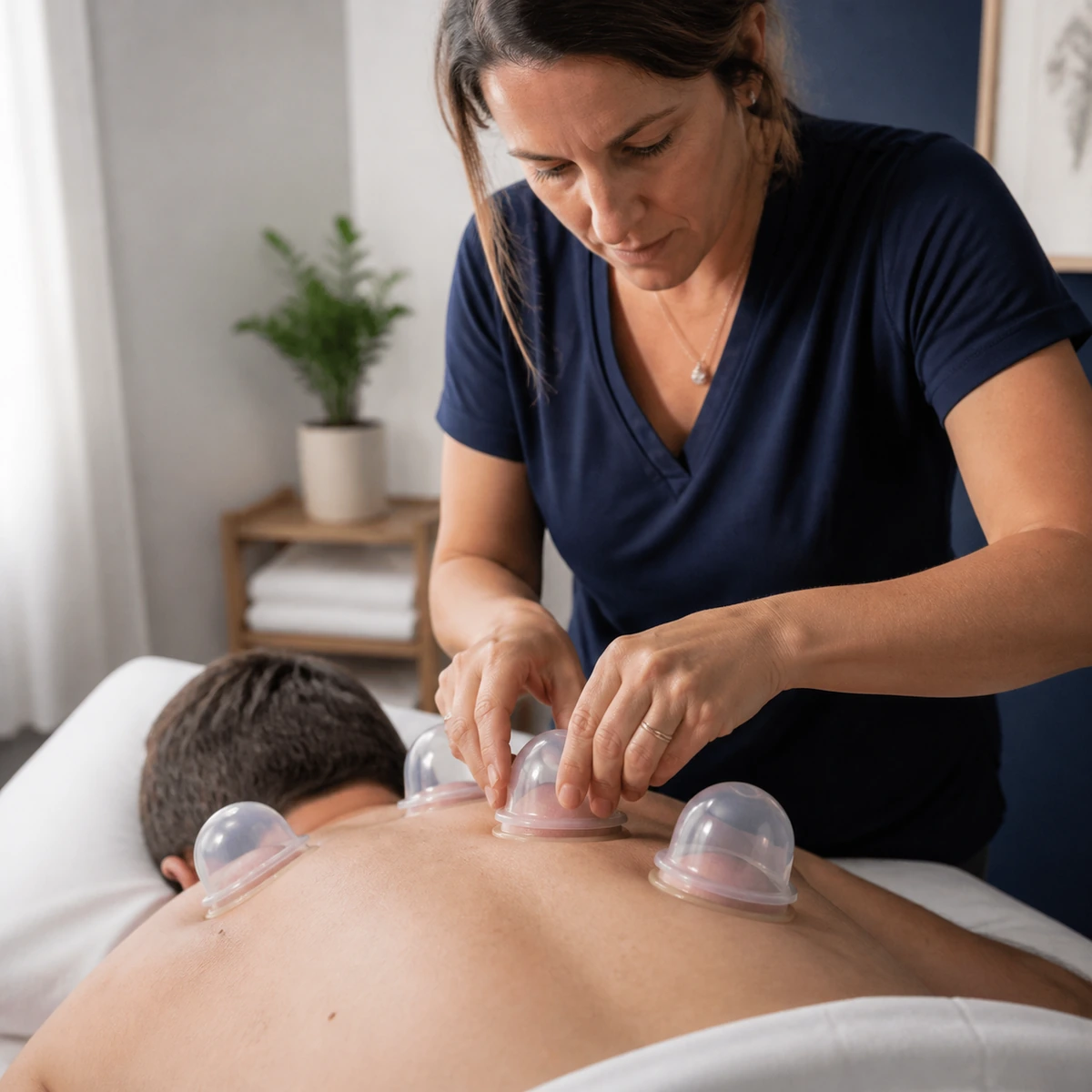
Cupping therapy is the placement of cups on the skin to create gentle suction that lifts the tissue underneath. That lift draws blood flow to the area, releases tight muscle and connective tissue, and encourages lymphatic drainage. A session runs 20 to 30 minutes, and the technique comes directly from Traditional Chinese Medicine.
Cupping comes in three methods, each matched to a different pattern: dry cupping for muscle stiffness, wet cupping for deeper release, and fire cupping for heat-based stimulation. Dr. Tsai chooses the method and pairs it with other therapies based on your specific pattern of tension, pain or fatigue, rather than applying the same approach to every patient.
Our process
A cupping session runs in five steps: consultation, assessment, cup placement, a rest phase and aftercare guidance. The session takes 20 to 30 minutes, and Dr. Tsai adjusts the suction to your comfort throughout.
We review your pain pattern, tension areas and health goals.
Dr. Tsai identifies which cupping method and areas fit your condition.
Cups are applied to create gentle, controlled suction on the treatment area.
You relax while the cups draw circulation and release tension.
We explain the marks, hydration and simple self-care between visits.
Your session
Cupping suits patients with neck or shoulder stiffness, back pain, arthritis, migraines, sports injuries, stress, respiratory complaints or fatigue. Most patients describe the suction as a tight, pulling sensation rather than pain, and find it relaxing.
Cupping is a calm, hands-on session, and Dr. Tsai explains the chosen method before the first cup goes on.
Cupping pairs with acupuncture as part of a broader Traditional Chinese Medicine plan.
Benefits
Patients notice released muscle tension, improved circulation and calmer energy. Lifting the tissue and drawing circulation to the area lets the body release what it has been holding onto.
01
Suction releases tight muscle and fascia that manual massage alone does not reach.
02
Blood flow to the area improves while the lymphatic system clears waste and toxins.
03
Cupping moves stagnant energy and eases stress, a core use in Traditional Chinese Medicine.
In-network with most major plans








Don't see your plan? Call (954) 987-6988 — we will check it for you before you book.
Free consultation | Same-week appointments | Most insurance accepted