
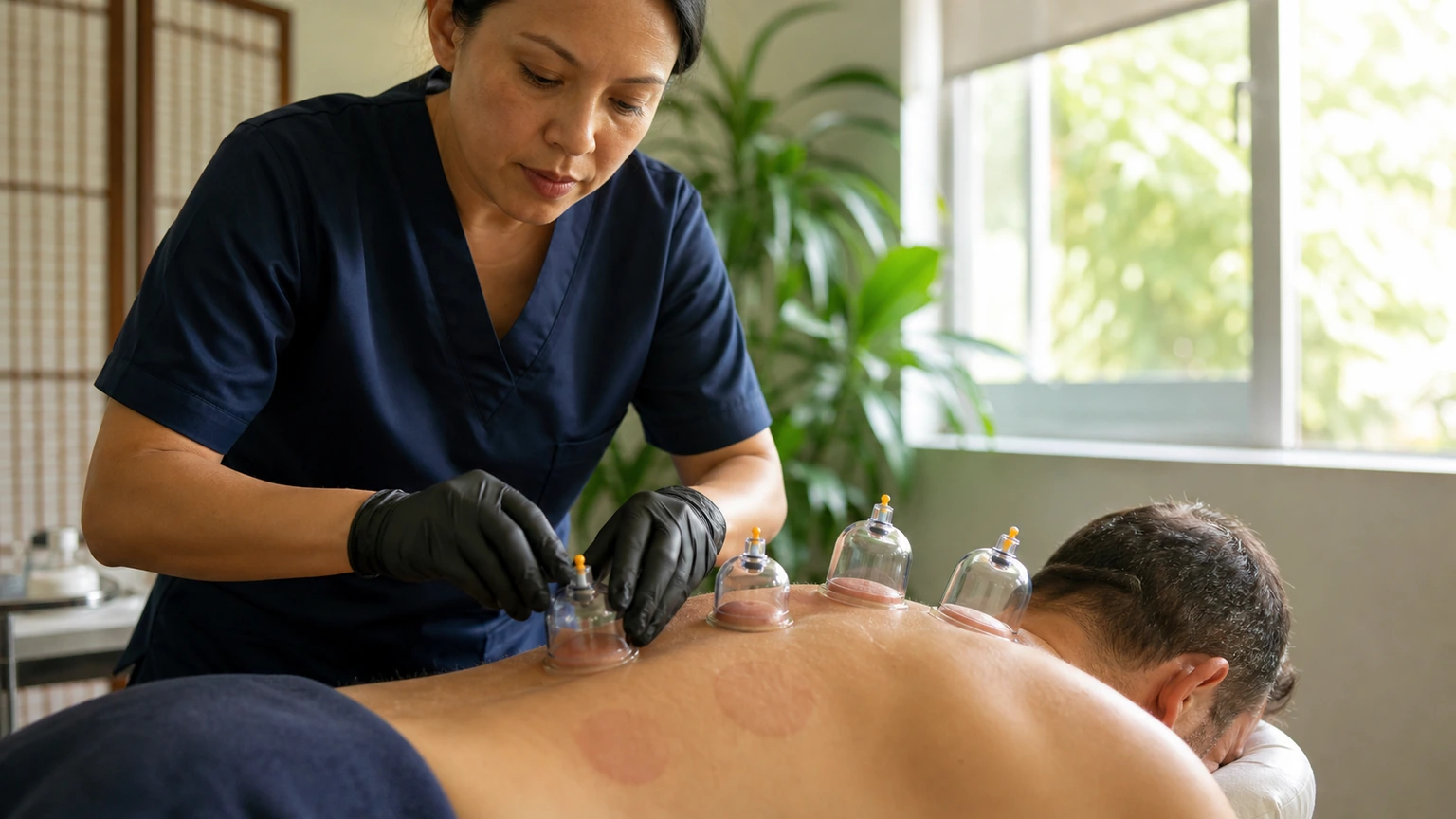
Blood circulation is what delivers oxygen, nutrients and energy to muscles and organs and carries waste away. When circulation slows, pain, stiffness, swelling and fatigue follow close behind. Cupping therapy is a drug-free treatment built to improve blood flow and support the body's own healing process.
What does cupping do to the blood under the skin?
Cupping lifts the skin and muscle upward, which draws fresh blood into tight or painful areas and moves fluid that has settled under the skin. The cups create gentle suction rather than pressure. Massage presses down into tissue; cupping pulls it upward, so the technique reaches deep muscle and connective tissue that surface pressure leaves untouched.
Why does circulation matter for healing?
Circulation matters because it keeps the body's repair systems running - carrying oxygen and nutrients to cells and clearing out carbon dioxide and metabolic waste. When circulation drops, five problems show up together:
- Muscle pain and stiffness
- Swelling and inflammation
- Slower healing after injury
- Cold hands and feet
- Fatigue and low energy
Blood that is not moving well leaves the body unable to repair itself efficiently. That is the exact gap cupping closes.
How does cupping improve blood flow?
Cupping improves blood flow because the vacuum inside the cup pulls blood toward the surface and into the treated area, so circulation rises within minutes. It does four things: it opens small blood vessels, brings oxygen-rich blood to the muscle, releases tight tissue that was restricting flow and encourages healthier blood movement across the whole region. More circulation means more nutrients reaching the area, which is what lets the body repair damaged tissue and reduce pain.
How does better circulation speed healing?
Better circulation speeds healing because repair depends on three things at once - blood flow, healthy tissue and fluid movement - and cupping supports all three in the same session. Tight muscles block circulation, and the gentle stretching of cupping relaxes them so blood moves freely again. The treatment also moves lymphatic fluid, the body's waste-clearing system, so swelling and pain drop. Because poor circulation drives inflammation, improving blood and fluid movement reduces the pressure behind it. Athletes book cupping after workouts and injuries for this reason: more oxygen reaching an area means faster recovery.
Which cupping technique matches which need?
The technique is chosen from three options: dry cupping for muscle pain and general poor circulation, moving cupping for larger regions like the back and legs, and flash cupping for sensitive areas and milder circulation problems. Dry cupping uses suction alone, with cups left in place for five to fifteen minutes. Moving cupping applies oil to the skin first, then glides the cups across the area. Flash cupping uses quick suction and release. Your provider selects the method from your condition and your comfort level.
Which conditions improve with better circulation?
Better circulation supports back, neck and shoulder pain, headaches and migraines, sciatica and nerve pain, arthritis and joint stiffness, sports injuries, fibromyalgia, chronic fatigue, and stress and anxiety. In each case circulation is doing the work behind the scenes - reducing pain and supporting the tissue repair that produces longer-term healing rather than a temporary fix.
What happens during a cupping session?
A session runs a short health review, then cups placed on specific areas for five to fifteen minutes. Patients describe a gentle pulling or tight sensation that is relaxing rather than uncomfortable. Round marks appear afterward - they are not bruises but a sign of increased blood flow, and they fade within a few days. One session produces a noticeable change for some patients; for others the improvement builds over a course of visits.
Why combine cupping with acupuncture?
Combining the two works because acupuncture balances the nervous system and energy flow while cupping moves blood and releases muscle tension. The two reach healing from different directions, so together they do more than either alone. At Advanced Acupuncture, Cupping Therapy uses clean, medical-grade equipment and is tailored to each patient's comfort and health needs, and it pairs with Acupuncture in the same treatment plan.
Is cupping worth trying for poor circulation?
Cupping is worth trying if pain, stiffness, swelling or cold hands and feet point to blood that is not moving well. It is a low-risk, drug-free way to improve circulation and support healing - reducing pain, lowering inflammation and speeding recovery. With better blood flow the body has what it needs to heal. Start with Cupping Therapy or Book an Appointment.